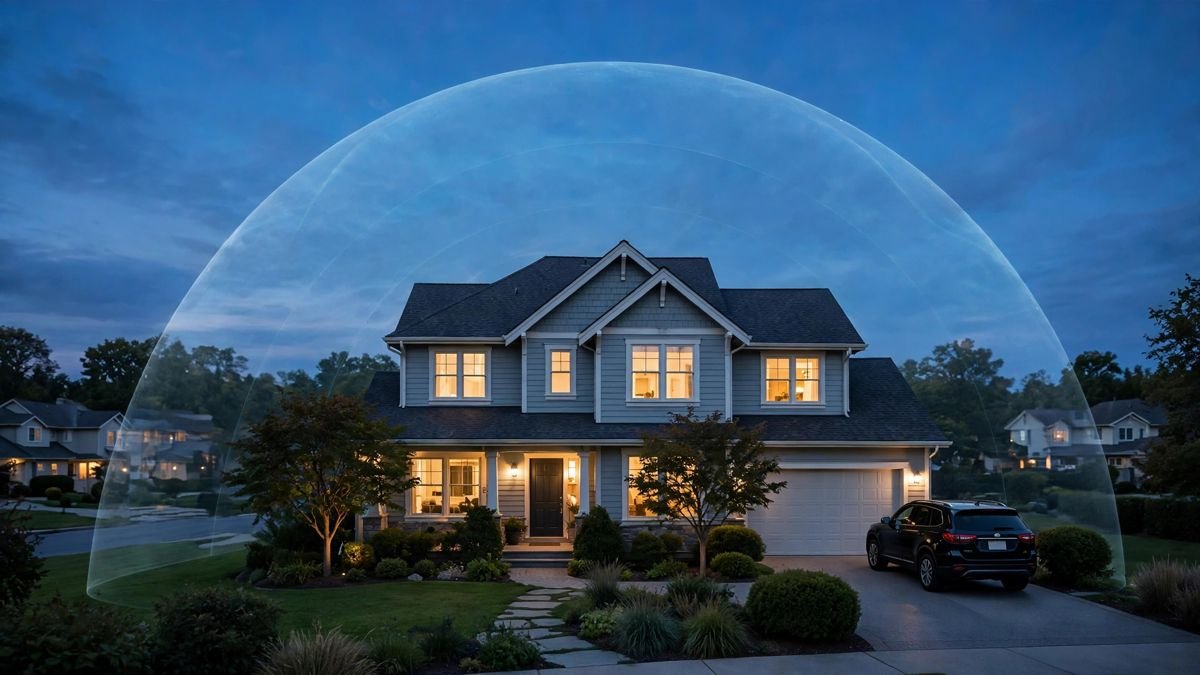
Your home is probably the biggest purchase you will ever make. Yet many homeowners treat insurance as a box to check at closing — and only discover what their policy actually does the day something goes wrong. This guide covers what homeowners insurance includes, what it leaves out, and how to pick a policy that genuinely protects you.
What Homeowners Insurance Actually Is
Homeowners insurance is a contract between you and an insurer. You pay a regular premium, and in return the insurer covers financial losses from specific events — a fire that damages your kitchen, a burglary that takes your electronics, or a visitor who gets injured on your property.
If you have a mortgage, your lender will almost certainly require coverage. But even without one, going uninsured means a single disaster could wipe out your equity overnight. Insurance doesn’t prevent bad things from happening; it makes sure one bad day doesn’t ruin your finances for years.
The Standard Coverage Parts, Explained
Most homeowners policies are built around the same core coverage sections. They’re usually labeled with letters — here’s what each one means in plain language.
Dwelling Coverage (Coverage A)
This protects the structure of your home itself — walls, roof, foundation, built-in appliances, and attached structures like a garage. If a covered event damages the building, dwelling coverage pays to repair or rebuild it.
The key detail: your dwelling limit should reflect what it would cost to rebuild your home, not what you paid for it or its market value. Land doesn’t burn down, so market value and rebuild cost are different numbers. Ask your insurer how they calculated the rebuild estimate — reputable ones use construction cost data for your area.
Other Structures (Coverage B)
This covers structures on your property that aren’t attached to the house — a detached garage, shed, or fence. It’s typically set as a percentage of your dwelling limit.
Personal Property (Coverage C)
This covers your belongings — furniture, clothing, electronics, appliances — against the same covered events. Many people underestimate what their stuff is worth. Walk through your home room by room and estimate replacement costs; the total usually surprises people.
One important distinction: replacement cost vs. actual cash value. Replacement cost pays what it costs to buy a new equivalent item today. Actual cash value pays that amount minus depreciation — so your five-year-old laptop is valued at a fraction of its original price. Replacement cost coverage costs more but pays out far better at claim time.
Liability Coverage (Coverage E)
If someone is injured on your property — or you accidentally damage someone else’s property — liability coverage handles legal costs and settlements. This is the coverage people think about least and need most when something serious happens. Consider limits that reflect your assets.
Additional Living Expenses (Coverage F)
If a covered event makes your home uninhabitable, this pays the extra costs of living elsewhere — hotel stays, restaurant meals, temporary rentals — while repairs are underway.
Common Exclusions You Should Know
Every policy has exclusions, and the big ones catch people off guard:
- Flooding — standard policies do not cover flood damage; flood insurance is a separate product.
- Earthquakes — usually excluded or available only as an add-on endorsement.
- Wear and tear — insurance covers sudden, accidental events, not gradual deterioration. A roof that leaks because it’s old and never maintained is generally not covered.
- Pest damage — termites and infestations are considered maintenance issues.
- High-value items beyond sub-limits — as mentioned, jewelry and similar items need scheduled coverage.
Read the exclusions section of any policy before you buy.
What Affects the Cost of a Policy
Premiums vary enormously between homes. Insurers weigh factors like:
- Location — areas with frequent storms, wildfires, or high crime carry more risk.
- Home characteristics — age, construction materials, and roof condition all matter.
- Coverage limits and deductible — higher limits raise premiums; a higher deductible lowers them (but means more out of pocket at claim time).
- Claims history — both yours and the property’s.
- Credit-based insurance score — used as a rating factor in many states.
- Safety features — smoke detectors, burglar alarms, and sprinklers can earn discounts.
No single factor decides your premium — it’s the combination.
How to Compare Policies Like a Pro
Don’t shop on price alone. Use this approach:
- Start with identical coverage limits. Get quotes with the same dwelling limit, deductible, and liability amounts so you’re comparing apples to apples.
- Check the insurer’s reputation. Look at financial strength ratings and read how the company handles claims — fast, fair claims service matters more than a slightly lower premium.
- Read the exclusions. Two policies at the same price can cover very different things.
- Ask about endorsements. Valuable add-ons include water backup coverage and extended replacement cost.
- Review annually. Renovations and new valuables change your needs — update your policy so coverage keeps up.
Money-Saving Tips That Don’t Sacrifice Protection
- Raise your deductible — carefully. Moving to a higher deductible can reduce premiums. Just make sure you could comfortably pay that amount after a loss.
- Improve home security. Deadbolts, monitored alarms, and smoke detectors can lower your rate.
- Maintain your roof. A well-maintained roof is one of the biggest factors in both insurability and pricing.
- Ask about every discount. Loyalty, claims-free history, and even certain professions can qualify — but you usually have to ask.
- Avoid small claims. Filing a claim for a minor repair can raise your premiums for years. Pay small fixes out of pocket when you can.
Final Checklist Before You Buy
- [ ] Dwelling limit reflects full rebuild cost, not market value
- [ ] Personal property coverage is replacement cost, not actual cash value
- [ ] Liability limits are high enough to protect your assets
- [ ] You understand every exclusion — especially flood and earthquake
- [ ] Valuable items are scheduled if they exceed sub-limits
- [ ] Deductible is an amount you could actually pay tomorrow
- [ ] You’ve compared at least three quotes with identical limits
- [ ] The insurer has strong financial ratings and fair claims reviews
The Bottom Line
Homeowners insurance isn’t exciting, but it’s one of the most important financial products you’ll ever buy. The right policy covers your rebuild cost, protects your belongings at replacement value, shields you from liability, and comes from an insurer that pays claims fairly. Spend an hour comparing properly now, and you’ll never have to wonder — when it matters most — whether you’re actually covered.